Showing posts with label B&W. Show all posts

Saturday, August 12, 2023

Russian Spy Film

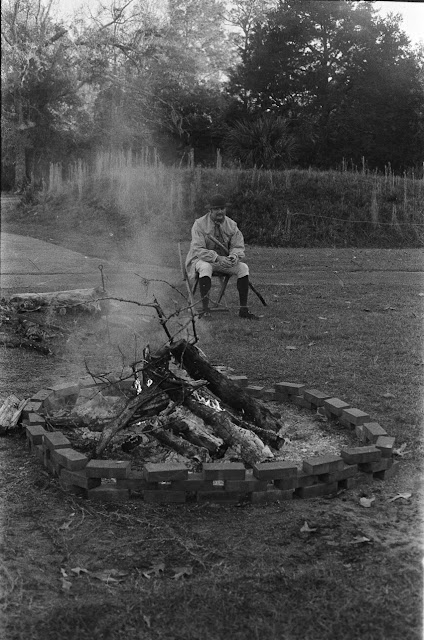
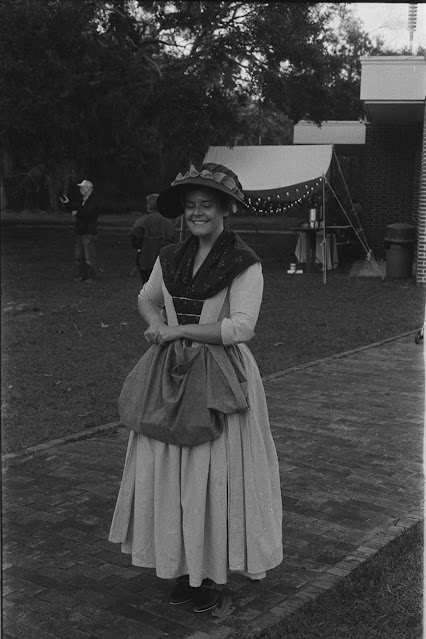
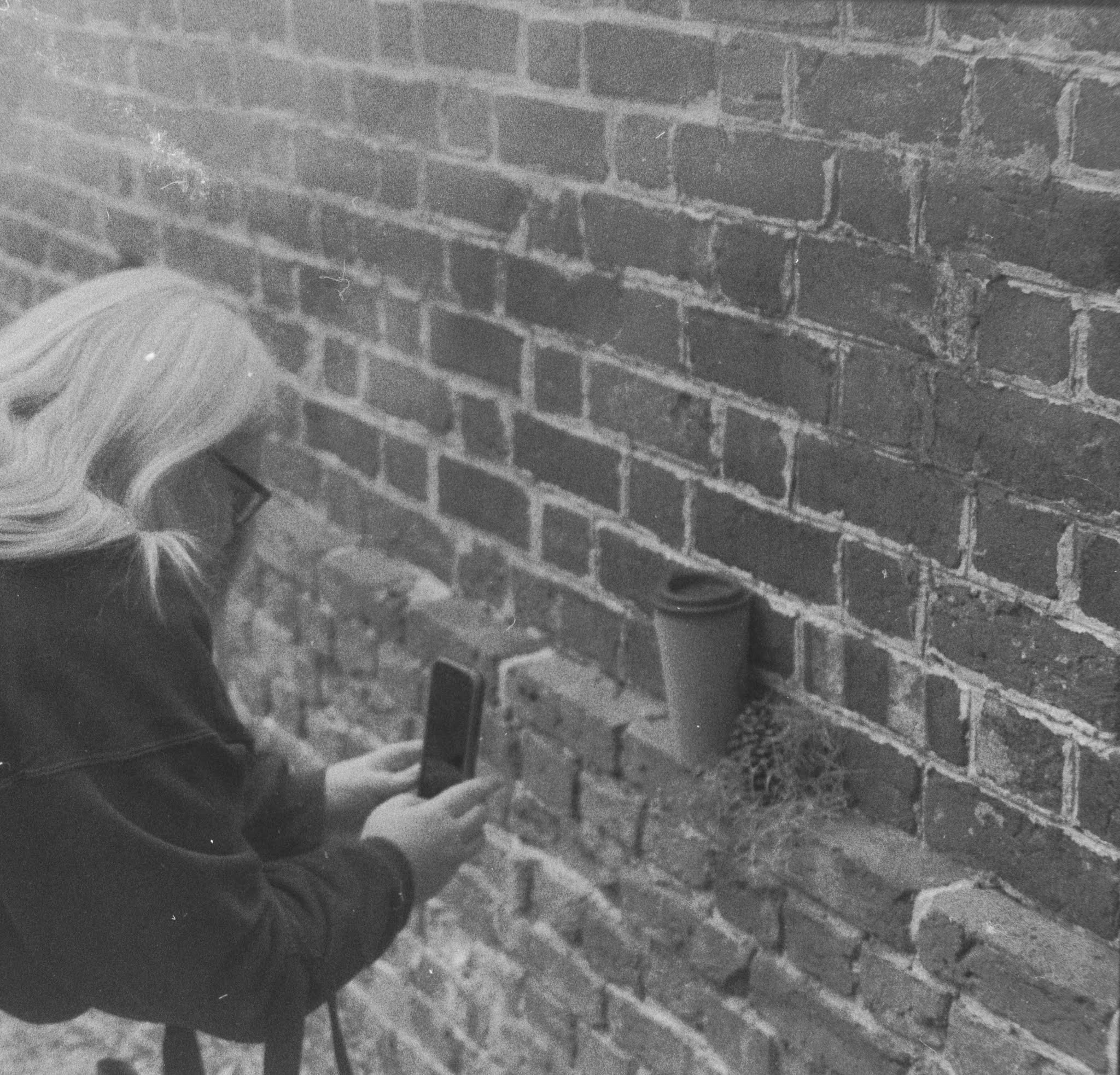
 No, I don’t mean a Russian version of 007, I mean photographic film designed by the Soviets for aerial surveillance, aka spy planes. I love playing around with different film stocks and this one is now made by the Ukrainian company Svema and sold by The Film Photography Project (https://filmphotographystore.com/ ) in handy rolls of 24 frames under the name Svema 64. It’s one of a number of Svema films they offer, but it appealed to me because of its low 64 ISO. I wanted to see if, given enough light, it would carry more detail than higher ISO films, and I was not disappointed.


The above examples are from the river walk in Georgetown, South Carolina, shot on a sunny day. I love the detail in the boats in the background of the top photo and the grasses in the background of the bottom one. The contrast is nice, not overwhelming but nice and crisp.


These above photos from the NC Ferry between Southport and Fort Fisher, also shot in full sun I also really enjoyed. 


But my favorite is below. It’s the Kaminski House in Georgetown and it’s one of the few I shot that day with a lot of shaded areas. I wasn’t sure it would work, but cranked the shutter speed as low as I dared and fired away. It’s nice having an old mechanical rangefinder that has no mirror to flip up and down letting you shoot at 1/30th or even 1/15th of a second with not camera shake if you’re careful. I was amazed at how well this film handled all the dynamic range, letting details show well in highlights as well as shadows. I will certainly try this one again.


Saturday, January 8, 2022

A Strange Little Camera


I took some money I’d received as birthday gifts and went looking for a new old camera. I wanted a 35mm slr (as opposed to the rangefinder I already have in the Petri 7S) produced sometime around mid-century. What I found was the Canon EXee. 

This was a transitional product in a couple of ways. It represented Canon following the public’s shift away from rangefinders. It wasn’t the company’s first slr but it was one of the first. It also sought to reach that transitional spot among photography amateurs turning into serious hobbyists. 

I think this sort of wishy-washy positioning is what led to some of the weirdness that I also think has left this camera model relatively undiscovered by the new breed of film photographers. I kind of like a misfit, though, and because they aren’t widely sought after, these cameras can be had in good shape for under $100. 


The first strange feature is its interchangeable lens system. Many mass-market, non-pro level cameras, such as my Petri 7S, have a lens that is built entirely into the camera. The Petri lens is great, but it is what is, there’s no option to go wider or telephoto. The upside is a simple, light design and a lens that can be closer to the film plane making it easier to capture sharp images at slower shutter


speeds. Professional cameras at this time had interchangeable lenses with a huge variety of options in one of many lens mount designs. 

The Canon EXee sort of splits the difference here. The base of the lens, the part closest to the camera body, is built in, but the outer piece can be unscrewed and changed up with a few options. I bought a model that came with the most common 50mm lens, but a 35mm wide angle and both 95mm and 135mm telephotos are also available. That isn’t nearly the number of options available for Canon’s EF mount lenses made for the pro-level cameras of the time, but it does offer some flexibility. Also, because you’re really buying essentially half a lens, the EE lenses are, and were at the time, very affordable. The other advantage is that this camera retains some of a fixed mount lens camera’s slow shutter speed stability. It’s definitely strange, but I think it’s also pretty cool. 

Canon also got creative in its attempt to split the difference between fully automatic and manual controls. This camera has very strange aperture controls. I guess they were trying to simplify the exposure triangle by putting one side of it completely in the hands of the camera? They were pretty proud of their idea, I guess, because that’s where the EE designation comes from. It stands for “Electric Eye”, which sounds more ominous than they intended I think. In EE mode, you select the film ISO and a shutter speed (from 1/8 sec to 1/500 sec) and the light meter selects an aperture for you. The light meter gauge you see in the viewfinder tells you the aperture, rather than the scale of under- to overexposure in other cameras. There is a manual mode for selecting your own aperture, but you kind of have to guess as the control only has the max f16 and minimum f1.8 settings displayed.


And the light meter still just tells you your aperture, not whether it not you are exposed correctly. The system isn’t so much difficult to use as it is just weird. It will take some practice and experimenting to figure out how to make this camera do what I want it to do rather what it wants to do.


My first test did not go well, but it was due to old processing chemicals rather than the camera itself. My results with a second roll of 400 speed B&W film were truly encouraging. One thing I noticed was that the images I took in the late evening (when I was really pretty sure there wasn’t enough light) came out much better than the ones in full sun. I’m not sure if that has to do with the metering of the camera, the accuracy of the settings or the film I was using, but time will tell. I’m excited that the camera did so well in low light, actually. Some of these photos that I thought would be throw-always turned out to be great. 


My next step is to try a lower ISO (200 speed in tis case) B&W film to see how that fixes the problems in full sun. After that I’ll venture into color films. I’m looking forward to the adventure and may even try to get a wider angle lens from eBay before a trip to the mountains of Alabama (yep, Alabama apparently has mountains) early next month. 


Sunday, September 5, 2021

Lessons From A Greensboro Road Trip

 I had the best time with the cameras in Greensboro. With the Lovely and Talented Miss Lisa in classes all day, I was left to my own devices and I took the chance to go to all the places and see all the things. Well, maybe not ALL, but quite a bit. 

Downtown Greensboro Photowalk

My first full day left to myself, I headed to downtown Greensboro for a photo walk. I got there fairly early, maybe 8:30ish, so it was very quiet. The buildings there are a funky mix of turn of the century brick with a little Art Deco thrown in. 

Greensboro’s Flat Iron Building on CineStill 50D

Cool curved wall on this old service station on ProImage 100

I packed my sling camera bag with the Eos-R with one lens, the 35mm f1.8, the Petri 7S and the Holga 120. Everything fit nicely and was pretty easy to get at. I was testing the idea of shooting film and digital on the same trip as well as limiting myself to one lens for the Eos R. It turned out I really enjoyed having three cameras (and my iPhone 12 Pro, which is kind of a bad ass camera itself) at my disposal. 

What surprised me was was how little I reached for the digital camera. I was having so much fun with the film cameras that I rarely pulled it out. When I wanted something that I could send to Lisa or John or share on social media, I used the phone. It’s not that the digital camera isn’t fun any more, it’s more that I just didn’t feel I needed to use it that morning. I found that being free to just use what struck me as the most fun at the time was pretty great.

The Holga and Tri_X make this look like it could have been taken 100 years ago

This just seems to cry out for B&W
I used Kodak ProImage 100 and CineStill 50D, both color films, in the 35mm Petri and one roll of tried and true Kodak Tri-X 400 black and white and one roll of Lomography Color Negative 400 in the Holga. I learned that slow speed (low ISO) films make the Petri more fun to use. I was a little nervous of the CineStill 50D because 50 is a lower ISO than I’d ever tried and I was hoping it would work ok. There was no need to worry, at least not on a sunny day. The CineStill was maybe even a little over exposed sometimes, I guess because I was afraid I wouldn’t give it enough light. I’m still thinking about how much I like that film, I’ll need to try some more and try to expose it correctly and see what I think. The ProImage was terrific. It let me us lower f-stops and slower shutter speeds than the 400 and 200 ISO films I’ve been using. And I like the colors and tone of the film. It’s definitely a keeper.

These colors! Disney, here we come!


These two are ProImage 100. I love these colors as well


Tank Museum

The following day the boy and I headed to Danville, Virginia to see the Tank Museum. I took the same three cameras and lenses. I put a roll of Tri-X 400 in the Holga and I had to fire off some random photos to finish off the CineStill 50D so I could replace it with the Film Photography Project’s Kodak Vision3 500T, a movie film made to shoot indoors under artificial light. I’ll write more about developing that one, it’s tricky, but in the end the results weren’t bad all. It handled the indoor lighting well and the Petri also handled everything just fine. The Tri-X, though, did not do well under that light in the Holga. I think being limited to f11 just wasn’t enough light. Nothing on that roll came out. But that’s how we learn. 

It was REALLY dark in here, but this still came out ok

Not terrible, but not great

Again, not so bad. 

The Grandover

Between adventures out and about, I took walks around the resort with all three camera and a variety of films. This was where I truly found the joy of having all these options. The Eos R gave me truly beautiful images and knowing I could capture something stunning was fun.  I’m still finishing the roll from the resort in the Holga, but finding shots that played to its quirks was a blast. The ProImage 100 images from the Petri were perfect in their own way, and were just what I was after when I shot them. Switching between the three, and deciding when and why, was fun in itself. As I learn more about the cameras and film stocks, this whole adventure gets more fun as more options open up. 

ProImage 100
Canon Eos-R 


Disney Plans

As a practice run for our Disney trip this trip was great. I’ve found I’m perfectly happy with one, good quality, mid-range lens. For Disney we’ll take the Canon 60D and the 50mm, and I think we won’t miss having a zoom or a telephoto. I’ve settled on buying a bunch of ProImage 100 and Lomography 400 for the trip, those two film stocks proved themselves to me. I’m settled on carrying all three into the parks, though I may switch to a regular backpack rather than the sling as the sling kind of gave my back fits after half a day of walking around. I’ll be bringing a pile of film again because I absolutely love starting the morning choosing what to bring from a wide selection. It’s going to be a Magical trip! 


Tuesday, August 17, 2021

Road Trip!!!!!!!

 It’s been soooooo long since we went anywhere for any length of time. We’ve done some fun day trips and we’ve been on a couple overnighters to go see the boy, but we haven’t proper been away since before The Plague Times. Tomorrow morning, though, we drop the News Hound off at Pet Camp and head to a fancy resort in Greensboro for four whole nights! It’s not quite really a vacation, though. It’s the annual conference of the North Carolina Association of Municipal Clerks, during which my lovely bride will become the new president of the Association. I’m very proud. I’m also really happy I get to tag along. Lisa will be in classes all day, so I will actually have a bit of vacation time. Naturally, I’m planning to use it to play with cameras.

We’ve been to Greensboro enough that I have a start of an idea of some things I need to see and hopefully shoot. The city has a fun little downtown area that we’ve mostly just driven through, so exploring that is high on the list. Greensboro prides itself on its green spaces, too, so I have some gardens and parks and trails on my list as well. It’s supposed to be sticky hot, but partly cloudy with just a chance of thunderstorms rolling through, so should be pretty good photography weather. And since Lisa’s classes start early, I can easily get my butt out for morning light and come back to do some magazine when the light is harsh (and it’s super hot.) That’s the plan anyway.

I’ve not been anywhere on photo safari since I began messing about with film photography, so I was’t sure what I wanted to bring. After thinking about it a it, I settled on pretty much everything. I have a good sling camera bag and also a fairly large backpack, so I have the room. I’ll leave the Brownie at home because folding it is a little iffy, but I’m bringing the Holga and the Petri 7 and the Eos R. I have the two RF lenses as well as the telephoto and the wide angle zooms. I figure I can look at the day’s weather and where I’m going and pack the sling with whatever I’ll want for that trip. Or throw the backpack in the car, who knows? But as far as cameras and lenses, I’m pretty well covered.

The Go Bag


Film left me putting in a little more thought. I’m leaving the slide fil at home because that’s for my Disney Project and I’m not confident about being able to replace any that i would use in Greensboro. The medium format film for the Holga was pretty easy as well. I’m taking three rolls each of Tri-X 400 and Lomo 400, that way I’ll have both color and black and white. I’m thinking it might be fun to load the Holga with color and the Petri with B&W or vice versa, so I always have both as options. That means I’m able to bring some pretty funky 35mm film. I have my Washi “S” 50 ISO sound recording film as well as both the 50D and 500T Vision3 Kodak film stocks from Film Photography Project. I’m also packing a couple rolls of the tried and true Gold 200 as well as two rolls of the very normal but new to me ProImage 100. 

I think that gives me a wide variety of film speeds in both color and monochrome for the Petri. I’m expecting lots of light, so the low ISO stuff should work well, especially in the urban areas. I can go to the 200 for the shady spots in the woods if I end up there. That’s the plan anyway. 

I’m hoping to have the chance to branch out a bit with my subject matter. Not only is it a new city, but it’s also much more urban than even Wilmington, so should offer a different style of shooting than I’m used to here at the beach. If there are people around, I could try some street photography. We’ll see if I get up the nerve. Maybe shooting strangers won’t seem so weird in a city. We shall see. 

And I’ll also always have the mirrorless Eos R with all its bells and whistles and options and a  big pile of memory cards to go along with it. 

I’m looking forward to spending some time just focusing on photography (heh, see what I did there). If all goes well, I’ll be busy in Jeff’s FotoMat and on the computer when we get back. And let’s be honest, this is a dry run for the Disney trip, so any lessons learned will be valuable. It’s all very exciting :-)


Saturday, August 14, 2021

The Holga 120N: Socialist Photography

 The Holga was developed in China to provide a camera to the Chinese working class. They were fans of 120 format film at the time, so it’s a medium format camera, made of plastic so it was easy and cheap to produce for the masses. The original had two f-stops (f8 and f11), a fixed shutter speed of 1/100th of a second, and a plastic lens that could be focused from 3 ft to infinity. It was, and if we’re being honest still is, an total piece of crap of a camera. 

The Holga is poorly made. The plastic that makes up its body isn’t particularly good plastic. It either comes straight from the factory with light leaks or tends to develop them over time. The lens is plastic and also not well made so focus is entirely random between cameras. You may get one that is sharp in the middle to varying degrees, or you may not. There is heavy a vignette. The camera back gets looser with use and will eventually just randomly fall off if you don’t gaff tape that sucker on. It’s bad.

It was also, in its time, hugely popular in China. The Chinese loved taking photos and this was the camera they could buy. There were no options, no free market with other cameras with different or more features or cameras that were better made at a higher price point. It was an option of buy the Holga or don’t buy the Holga. And they bought the Holga. Until 35mm film penetrated mainland China and became popular. 

With fewer people buying the Holga in Mainland China, the government manufacturer expanded sales into Hong Kong, and eventually into the rest of the world. And then options became available, because all of a sudden the Holga needed to compete on a free market. It got a cold shoe for a flash and a tripod mount. But that was about it. It didn’t do well and production was stopped. 

Then Westerners discovered it. Frustrated and maybe a little worn out with modern cameras and all their amazing features, a small but dedicated group of film photographers fell in love with the Holga and its bare bones, Communist simplicity. Once photographers made the conscious choice to use a plastic piece of crap camera all its flaws became features. The vignette became artistic and the lousy focus of the plastic lens became “soft focus,” again, artistic. Production resumed. The free market had saved the communist camera. Now they come in all sorts of varieties. Some are panoramic, some have multiple colors of built-in flash, there’s even a 3-D model, I think. Also, they now come in fashion colors, not just the proletariat black of the original. 

This thing is so ugly it’s cute. Here it’s set on the sunny f-stop and the “mountains” focus. 

It’s still plastic and still, really, a piece of crap. But it’s a $35 medium format camera and I had to try it. And I love it. It really is fun, after using a camera that can do pretty much anything I ask of it, to use a camera that will do what IT wants no matter my thoughts or wishes. 

Shooting with the Holga is easy. You just put the aperture setting on the clouds or the sun depending on if it’s cloudy or sunny, try to noodle out if you should use the one person, two people, group of people or mountain focus setting, aim the camera in the general direction of what you want to shoot (the viewfinder doesn’t show you what the lens will see) and click. 

I used the “one person” focus and Lisa came out in focus!


As I mentioned earlier, each Holga is different. Some people buy several and then pick which to use based on each camera’s peculiarities. I only have the one and feel like I lucked out. It is really pretty nicely focused at the center of the frame but drops of to a kind of wavy out of focus-ness at the edges. The more light I have the heavier the vignette is. I don’t have any light leaks yet. I’ve run a roll of color and a roll or black and white film through it and was pleased with the results. I wouldn’t use it for any sort of professional purpose or to shoot a once in a lifetime event, but as something to carry around and play with, it is absolutely a blast. And it weighs almost nothing, so carrying it around is easy. 

In bright sun, the vignette is heavy, but I like it


I’m grateful to live in a capitalist country where my options for pretty much everything are almost inconceivably wide. I wouldn’t want the Holga to be my one and only photography option. But it is really cool to be so blessed with high quality photographic equipment at prices I can afford that I can buy a truly bad piece of equipment and love it for it’s flaws. 

Just look at the difference in focus from the center to the edge. 


Friday, June 25, 2021

Funky Film

One of the most fun parts of film photography is getting to try out different films. Traditional films each have their own special look, but with the huge reduction in film production, the film shooter community has gotten creative, using found stashes of expired films and even films not entirely meant to be run through a still camera. I have three of these oddball stocks in my collection now and I’m looking for just the right use for each.


The most normal one is a roll of the Film Photography Project’s Retrochrome 400. This is government surplus 400 speed Kodak Ektachrome color positive (slide) film that expired in 2004. They say it performs perfectly well still so they’re pretty sure it was in some sort of deep freeze for the last 15-some years. I’ll probably save this for my  little project I have coming up in the fall that I’ve not written about yet. Soon. Oh, and those two other rolls of Ektachrome 100? They’re for the project as well. Stuff is becoming hard to come by and I wanted to make sure I had enough.

I’m also sitting on a roll of the Film Photography Project’s X-2, made from Eastman’s Double X black and white motion picture film. This is the film stock used to shoot Raging Bull, but hand-rolled into recycled 35mm film canisters. It’s a 200 ISO film, so it will have a pretty wide latitude. I might try shooting this one inside so I can open up my lens wider than I’m able to outside with 200 speed film. 

The last funky film is, I think, the funkiest. It was also purchased from the Film Photography Project but produced by some folks called Washi. They make a series of films at a variety of ISO’s and this one is called Washi “S” and the “S” is for sound. That’s because it was made to record audio, not images. Apparently, recording on 35mm film was the high fidelity thing back in the day, to the extent that several of Frank Sinatra’s albums bragged about being recording on film. It’s a 50 ISO black and white film, which will be great in my camera outside. The folks at FPP say it’s super high contrast and very low grain. Aside from outside, I’m not sure what I’ll shoot with this one. 

I have my eye on some other non-traditional films, such as a few other motion picture films, a still camera film made for security cameras and one made for high altitude surveillance photography. One of the rewards of getting comfortable developing at home is that I feel confident trying these other stocks, and since the cost of processing is so small, I don’t feel bad spending a few bucks on a film that may or not give me anything worthwhile. 

Saturday, April 3, 2021

Zen and the Art of Photography

Getting the April issues of Southport and Leland Magazines finished and to the press last weekend kicked my butt. Deadline week always takes a lot out of me because it means wearing all the hats I wear all at the same time. Getting editorial straight, making sure all the advertising is in and correct, laying it all out in InDesign and getting that package to the printer uses all of my available brain power. Adding the time-sensitive nature to that, it all needs to be finished by a hard and fast deadline hour, puts me in mental state that is not easy to just drop out of once all the work is accomplished. 

I tried taking a break last Saturday by taking the cameras out with Lisa and shooting some photos in Leland. We had a blast, but knowing all I had to do and being really in the middle of all the deadline pressure led to me not thinking my way through what I was doing and so making mistakes. I double exposed, I forgot to change the focus, and I messed up the rinse time of the developing of that roll. Using that old folding Brownie requires close attention to do it correctly. 

This past Tuesday was my official “day off” for the month. It was the day after the magazines were sent to the press and the day before they are dropped off for me to deliver. I always try to use that day each month as a re-charge day and not do much if any magazine work. The April issues I had just finished were good ones, full of good content and lots of ads, but they took a lot of last minute work to bring off. I was pretty frazzled and my brain was still running a mile a minute. I needed to unwind. 

Lisa recommended I “go somewhere” and suggested Calabash, just to get a change of scenery. That was a great idea and I decided to go bit farther south and visit the Vereen Memorial Gardens in Little River, South Carolina. I figured the flowers would be out and there is an angel statue there that I really wanted to capture with the Brownie. 

The plan worked. I took both the Brownie and the EOS-R with a new 35mm lens I’d just bought. It was amusing to me to carry around two ends of the technology spectrum like that. The EOS-R was for fun and the Brownie was for therapy, to force me to slow down. 

Using the Brownie is different. Its limitations force you to think both differently and more. With a max of six frames, choosing a subject isn’t impulsive like it is with a digital camera. I had a couple shots I really wanted: the angel and something waterfront Calabash. I wasn’t confident of finding the beginning of the film so I took an image I wasn’t dying for as the first. Just a shot through a fallen tree looking out over a saltwater marsh. It came out ok, but also shows that I wasn’t fully invested. It’s just ok.

I put the Brownie up and took a walk with the EOS-R that was just the kind of relaxing I needed. It was warm but not hot, breezy but not windy and sunny but full of big puffy clouds. I got some cool photos but I’ll write about that later. 

Then it was off to get the shot I drove there for. The angel is part of a memorial to the Vereen family after which the gardens are named. It sits just off the road in a clearing. This day the sun was coming in and out from behind the clouds and when it was out, it shone right on the angel. I concentrated on doing everything right. I paced off the distance for focus. I checked the exposure with my app and set what I though would be right. I took my time fussing with the viewfinder to frame the angel well. Then I just stood there and waited for the sun. There were no cars driving by and no other people. It was just me and the wind and the angel and the old camera. When the sun came out and hit the angel’s face just right I tripped the shutter and repeated the process for another angle just to cover myself. I figured this was worth two of my six frames. 

My second angle. I like it, but like the one at the top of the blog better


The entire process probably took 20 minutes. It was exactly what I needed. Slow, meticulous, step-by-step and entirely without deadline. I had slowed down and found my calm, and my happy. 

Then a dude with a leaf blower rolled up so I moved on. Off to Calabash.

On the waterfront I found the shrimp boat I had planned to shoot, but then I had a change of plan. There were big pelicans on the pilings by the boat. I’m a sucker for a pelican on a piling and these were very chill pelicans who didn’t mind me being there in the least. So I was able to go back to my slow, methodical routine. I was excited by the birds and didn’t want them to fly off, but forced myself to just trust they’d stay and not rush at all. It worked out well and my pelican buddies remained perfect models. 


I’m thankful for the outlet photography gives me, and I’m particularly thankful for having discovered this old camera that forces me to slow down and fully engage in the process. I feel like it is more than just relaxing, I think it makes me a better photographer. Even using a modern DSLR, it is never a bad thing to slow down and think. And it’s good for the soul as well. 

Sunday, March 21, 2021

ISO, Grain, and My Collection of New Film


When I decided to try to get the folding Brownie working, I ordered a 5-pack of Kodak Tri-X 400 B&W film. I figured five rolls would give me a good shot to see if the camera was viable or not and Tri-X is pretty much the standard in the US for black and white film. This is the film stock used by nearly all photojournalists back before the digital age, so it’s “look” is one we are all familiar with from newspapers. I thought that would be the best film to judge how the camera was working because I knew what it should look like. I believe that worked and that I now know that that old camera can, if I get everything right, produce great images. 

Now it’s time to branch out. One of the fun parts of film photography is working with different film stocks that all have different properties, some slightly different and some vastly different. The range of films in black and white isn’t nearly what it is in color, but there are still differences in tone and contrast and grain that can be fun to play around with. 

So, I went to B&H and found four different films that were all among the cheapest on the site. I don’t want to break the bank and seeing as I’m not using anything approaching state of the art, why not embrace that and go as simple as possible? I also wanted to try out different ISOs to see if I could get good exposures using my kind of guesswork light metering system and the Brownie’s limited options. 

The 400 ISO Tri-X I started with is a great all-around film speed that can handle both bright sun and even indoor artificial light. If you’re not familiar, ISO refers to the film’s sensitivity to light. The higher the ISO (sometimes called the ASA), the more light-sensitive the film is and the less light is needed to get a good exposure. Higher ISO is also called higher speed. The nomenclature is confusing at first, but it means the same thing, higher number equals able to shoot in lower light. 

The trade off is grain, the kind of chunky look that a print or scan of an image has, making it look like it’s made up of a ton of little dots. Grain can be big or small and rough or smooth and it is one of the huge differences in different films. Grain is not necessarily a bad thing. A lot of photographers add grain to their digital images in Photoshop or Lightroom. There’s a slider right there just to do that. It makes an image look more.....artistic, maybe? More “real”? Which is kind of ironic as it actually makes the image look less like the thing the camera was actually aimed at in the real world. But we are used to seeing grain in photographs, so to us, or many of us at least, it belongs there. Anyhow, often cheaper films are grainier, and higher speed (higher ISO) films are grainier. 

The films I chose are Arista Edu Ultra 100, Arista Edu Ultra 400, Holga 400, and Foma Creative 200. These each cost about $5 versus the more than $7 for each roll of Tri-X. I thought I had three film brands and four different rolls. Turns out all the film I bought is made by Foma, the Czech company I talked about in the last blog post. It’s just different packaging. I don’t mind, except that I really have three different films as the Holga 400 and Arista Edu 400 are the same thing. But no biggie, I’ll have fun with all of these and look forward to seeing the results. 


Thursday, March 18, 2021

Second Try At Home Developing

This one didn’t turn out as well as the last, sadly. I shot a roll of 35mm black and white with the Vivitar V2000 to have something else to develop, mostly. I wanted the practice. Also, I thought it would be fun to play around with different types of film and see how they differed. This one was Fomapan 400 Action film from the Czech Foma company. They’ve been around for 100 years making various types of film, from consumer camera film like this to specialized medical film. I can’t blame the failure on them


We were out and about a couple Saturday’s ago and I thought a local state historic site, Brunswick Town, would make a good subject for monochrome photography. There are ruins, including the walls of a big brick church, that I thought would be fun to shoot. It was a great spot, and we’ll go back and try again for sure. 


I’ll start out with the most successful image from the roll. This turned out much as I’d hoped and the fogging and stray chemical marks that plague most of the other shots aren’t so noticeable here. It’s foggy, to be sure, but not awful. 


Here is a less successful image. The fog is bad and there are what I think to be shadows of the film itself on here. I am pretty sure I screwed up loading the film on the reel. I think some of it overlapped and was touching during the developing process. I was fumbling around in the dark trying to get it on right and I suppose I failed. Surprisingly, it turned out to be more difficult than the 120 film, which is the opposite of what I’d read was the case. But who knows, I’m just clumsy. Practice will make perfect.

I’m not too upset with this photo of Lisa either. I cropped out a bad stain and what’s left is pretty ok. This film has a very noticeable grain, but how much of that is native to the film and how much is due to my developing process, I don’t know. I’ll have to try some more and see. 


This one of an old house up the road from the historic site is pretty cool even with the fogginess. I might be able to pass it off as intentional and artistic. It makes it look kinda spooky for sure. 

In the end, I’m not upset at the results. Mistakes are learning experiences and the film was very affordable. It was a good one to screw up on. The next roll through that camera is going to be Kodak’s professional grade TMax at a 100 ISO. I’m curious to see the differences ad a bit worried about rolling the longer 36 exposure roll onto the spool. We’ll see. I also have Foma film on the way in 120 for the Brownie. I’m excited to compare how it looks with the Tri-X I’ve shot thus far. Here’s hoping the sun comes out someday and I can get out and shoot some more soon.

Saturday, March 13, 2021

Home Developed Brownie Photos

I really couldn’t be happier with these. The magical alchemy of fumbling in the dark with getting the film on the reel, pouring in the chemical and shaking it around just enough but not too much, rinsing it for what feels like eternity and then pulling it out and seeing actual real GOOD images is just awesome. I got five images out of this roll, which is an improvement. The first one is borderline edge of the film, so maybe another half turn of the spool there. There’s enough space between images that I think I could turn less and squeeze a sixth frame out of the roll, but that will be tops. Here’s what I ended up with from a stroll around Southport on a beautiful Thursday afternoon. 


 I found this classic parked next to Southport’s Garrison House with the owner, in a matching sweater, sitting on the lawn next to it soaking up the sun. He loved the old camera and said he’d had one very similar to it before his wife sold it at a garage sale. You can see on the left what. Think is the very beginning of the film, I think it’;s the tape holding the film to the paper backing. My light leak is on the top left, but I’m increasingly leaning toward not worrying about plugging it. I set the focus to 8 feet and erred a bit toward over exposure and I think it worked well. I’m terrible at getting a horizon straight on my modern camera, even with a digital level showing, so I think getting a non-tilted photo out of this camera with a waist-level viewfinder that’s clouded with age is simply not in the cards. We’ll call it artistic. 


I have been hesitant to take two images of the same subject since I have so few frames available, but I wan’t sure the first was actually on the film, so I shot this of the iconic tail fin. I ended up with a cool reflection in the immaculately clean paint job and a nice sun flair on the fin. Again this was set to 8 foot focus and I guessed how far away I was. I’m blown away by how sharp a 100 year old lens can be especially with focus being so much guesswork. 


This is the least successful image of the lot, but I kind of expected that. First off, I forgot to move the focus up from 8 feet to 25 feet, which turned out to be less of a problem than I expected. Also, I was shooting holding the camera above my head over a wall to get what I hoped was a good angle on this historic home’s porches. The entire image is a bit foggy, which must be due to something at the time of the exposure rather than developing because it’s only on this frame. Southport architecture photography will take some more work. Maybe I’ll dedicate a roll to just that soon. 


This is one of the boats in the double exposure I took on the first roll. She’s a refurbished fishing boat now serving as a cruiser and she’s gorgeous. My light leak is not causing any real trouble and the focus was set to a proper 25 feet. Again I’m so happy with the performance of this old lens. Also, the contrast is nice with detail in both highlights and shadows.


Here’s the last shoot, a shed used by the folks who own the nearby slips. This one might have been a little more exposed and been better, but I can likely mess around with it in Lightroom until I love it. Even so, I am really pleased with this, another 25 foot focus. I included too much gravel and cut off the top of the roof because the viewfinder doesn’t quite match either what the lens is seeing nor the size of the film. But that will just take practice to noodle out. 

All in all I’m super happy with these. This old camera doesn’t just work, it looks like it’s capable of capturing truly great images. The challenge will be working out the quirks of the viewfinder and the winding of the film. 

As far as the developing, I nailed it if I do say so myself. I don’t feel like I lost anything by going with a one-step developer rather than the traditional multi-chemical process. The TriX film I’m using performs great in this camera. I have several different brands and speeds of film on the way, so we’ll see how they work, but 400 speed might just be the sweet spot. 

Next, I’d like to take more close (8 foot focus) shots and work on some portraits of the Lovely and Talented Lisa. Stay tuned :-)

Russian Spy Film

 No, I don’t mean a Russian version of 007, I mean photographic film designed by the Soviets for aerial surveillance, aka spy planes. I love...