Showing posts with label Fomapan. Show all posts

Sunday, March 21, 2021

ISO, Grain, and My Collection of New Film


When I decided to try to get the folding Brownie working, I ordered a 5-pack of Kodak Tri-X 400 B&W film. I figured five rolls would give me a good shot to see if the camera was viable or not and Tri-X is pretty much the standard in the US for black and white film. This is the film stock used by nearly all photojournalists back before the digital age, so it’s “look” is one we are all familiar with from newspapers. I thought that would be the best film to judge how the camera was working because I knew what it should look like. I believe that worked and that I now know that that old camera can, if I get everything right, produce great images. 

Now it’s time to branch out. One of the fun parts of film photography is working with different film stocks that all have different properties, some slightly different and some vastly different. The range of films in black and white isn’t nearly what it is in color, but there are still differences in tone and contrast and grain that can be fun to play around with. 

So, I went to B&H and found four different films that were all among the cheapest on the site. I don’t want to break the bank and seeing as I’m not using anything approaching state of the art, why not embrace that and go as simple as possible? I also wanted to try out different ISOs to see if I could get good exposures using my kind of guesswork light metering system and the Brownie’s limited options. 

The 400 ISO Tri-X I started with is a great all-around film speed that can handle both bright sun and even indoor artificial light. If you’re not familiar, ISO refers to the film’s sensitivity to light. The higher the ISO (sometimes called the ASA), the more light-sensitive the film is and the less light is needed to get a good exposure. Higher ISO is also called higher speed. The nomenclature is confusing at first, but it means the same thing, higher number equals able to shoot in lower light. 

The trade off is grain, the kind of chunky look that a print or scan of an image has, making it look like it’s made up of a ton of little dots. Grain can be big or small and rough or smooth and it is one of the huge differences in different films. Grain is not necessarily a bad thing. A lot of photographers add grain to their digital images in Photoshop or Lightroom. There’s a slider right there just to do that. It makes an image look more.....artistic, maybe? More “real”? Which is kind of ironic as it actually makes the image look less like the thing the camera was actually aimed at in the real world. But we are used to seeing grain in photographs, so to us, or many of us at least, it belongs there. Anyhow, often cheaper films are grainier, and higher speed (higher ISO) films are grainier. 

The films I chose are Arista Edu Ultra 100, Arista Edu Ultra 400, Holga 400, and Foma Creative 200. These each cost about $5 versus the more than $7 for each roll of Tri-X. I thought I had three film brands and four different rolls. Turns out all the film I bought is made by Foma, the Czech company I talked about in the last blog post. It’s just different packaging. I don’t mind, except that I really have three different films as the Holga 400 and Arista Edu 400 are the same thing. But no biggie, I’ll have fun with all of these and look forward to seeing the results. 


Thursday, March 18, 2021

Second Try At Home Developing

This one didn’t turn out as well as the last, sadly. I shot a roll of 35mm black and white with the Vivitar V2000 to have something else to develop, mostly. I wanted the practice. Also, I thought it would be fun to play around with different types of film and see how they differed. This one was Fomapan 400 Action film from the Czech Foma company. They’ve been around for 100 years making various types of film, from consumer camera film like this to specialized medical film. I can’t blame the failure on them


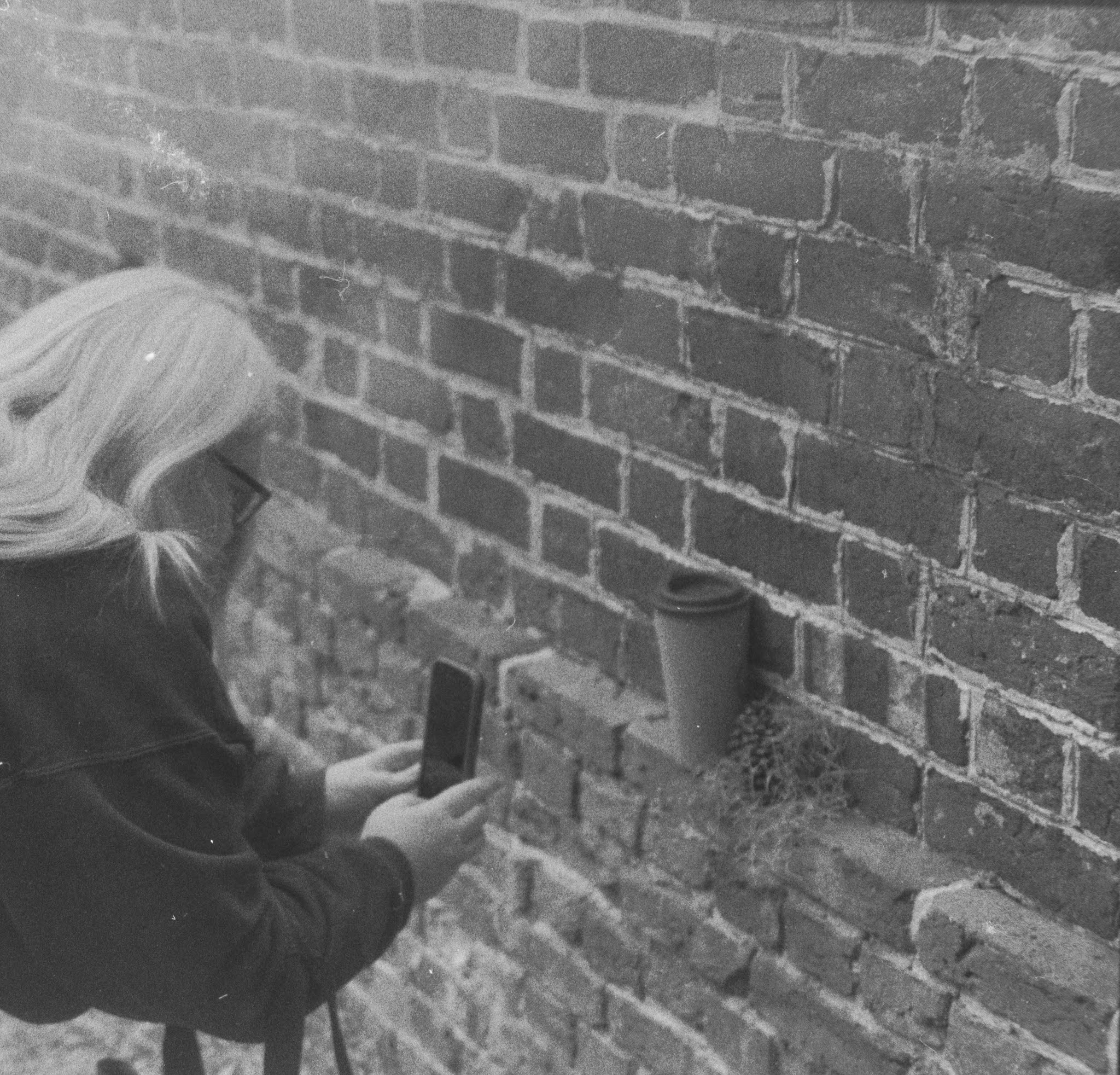
We were out and about a couple Saturday’s ago and I thought a local state historic site, Brunswick Town, would make a good subject for monochrome photography. There are ruins, including the walls of a big brick church, that I thought would be fun to shoot. It was a great spot, and we’ll go back and try again for sure. 


I’ll start out with the most successful image from the roll. This turned out much as I’d hoped and the fogging and stray chemical marks that plague most of the other shots aren’t so noticeable here. It’s foggy, to be sure, but not awful. 


Here is a less successful image. The fog is bad and there are what I think to be shadows of the film itself on here. I am pretty sure I screwed up loading the film on the reel. I think some of it overlapped and was touching during the developing process. I was fumbling around in the dark trying to get it on right and I suppose I failed. Surprisingly, it turned out to be more difficult than the 120 film, which is the opposite of what I’d read was the case. But who knows, I’m just clumsy. Practice will make perfect.

I’m not too upset with this photo of Lisa either. I cropped out a bad stain and what’s left is pretty ok. This film has a very noticeable grain, but how much of that is native to the film and how much is due to my developing process, I don’t know. I’ll have to try some more and see. 


This one of an old house up the road from the historic site is pretty cool even with the fogginess. I might be able to pass it off as intentional and artistic. It makes it look kinda spooky for sure. 

In the end, I’m not upset at the results. Mistakes are learning experiences and the film was very affordable. It was a good one to screw up on. The next roll through that camera is going to be Kodak’s professional grade TMax at a 100 ISO. I’m curious to see the differences ad a bit worried about rolling the longer 36 exposure roll onto the spool. We’ll see. I also have Foma film on the way in 120 for the Brownie. I’m excited to compare how it looks with the Tri-X I’ve shot thus far. Here’s hoping the sun comes out someday and I can get out and shoot some more soon.

Monday, March 8, 2021

Back To The 90s

 The idea of developing my own film left me wanting to try out some 35mm as well as messing around with the old Brownie. I mean, if I can develop it myself, and scan it in easily enough, I might as well. So I dug into the closet and pulled out the Vivitar V2000 my parents gave me as a high school graduation gift. This is the camera that served me well through my college Photojournalism class and the camera that took all our pictures of John as a little guy. The negatives I’ve been practicing my camera-based scanning on came from this camera. It’s not fancy, it’s the basic camera from a company that wasn’t at all known for cameras, but it holds a lot of memories for us. 

I’m starting out with black and white developing so I ordered two roll so B&W film to try out. I looked on B&H and found the cheapest roll I could find and ordered it up and then found Kodak TMax, a step up in quality from the Tri-X I put in the Brownie. 

The cheap film is called Fomapan profi line Action and it’s a 400 speed ISO made by a Czech company called Foma Bohemia Ltd with a history in film going back 100 years. THey claim their film to be fine grain and perfect for all-around uses. The Kodak TMax I got is 100 speed and promises “the finest grain”, so we shall see. 


The camera itself is, as I said, very basic. It has a light meter, a little red plus or minus or green circle that light up to tell you if you’re over, under, or properly exposed. I’m not sure how well it works. It’s the only part of the camera dependent on the battery and I can’t remember ever putting a new battery in. It lights up still, though. The lens is a 35-70mm zoom that claims macro capability. The glass is clean and the shutter seems to be working right. LAst I used it it worked just fine and I have no reason to believe anything has changed.

This past weekend we met some friends at Brunswick Town historic site near here and I shoot the roll of Foma since it was a cloudy, overcast day. It took longer than I thought to go through the 24 frames. In the same place under the same circumstances I’d have taken probably more than 50 photos with the digital camera, but knowing i only had 24 frames, i was more choosy and it led me to leaving Brunswick Town with a few shoots left. We went up the road a I shot an old home off the side of the highway and then ran through the rest at the park while walking the dog after we got home. 

I apparently hadn’t rolled the film all the way back into its canister so I exposed some of the roll where I opened the camera to take it out. No huge loss as I was just testing the camera and mostly seeing if I could still develop film well. I do need to learn to be more careful and get a better feel for when the film is all rolled up, both on this camera and the Brownie. Thus far, I’m lousy at that part. 

Hopefully the developer and PAtterson tank arrive today and I can open my Stites Fotomat soon!


Russian Spy Film

 No, I don’t mean a Russian version of 007, I mean photographic film designed by the Soviets for aerial surveillance, aka spy planes. I love...